Address
Liwan District, Guangzhou City, Guangdong Province, China
Work Hours
Monday to Friday: 10AM - 5PM
Weekend: 11AM - 5PM
Address
Liwan District, Guangzhou City, Guangdong Province, China
Work Hours
Monday to Friday: 10AM - 5PM
Weekend: 11AM - 5PM


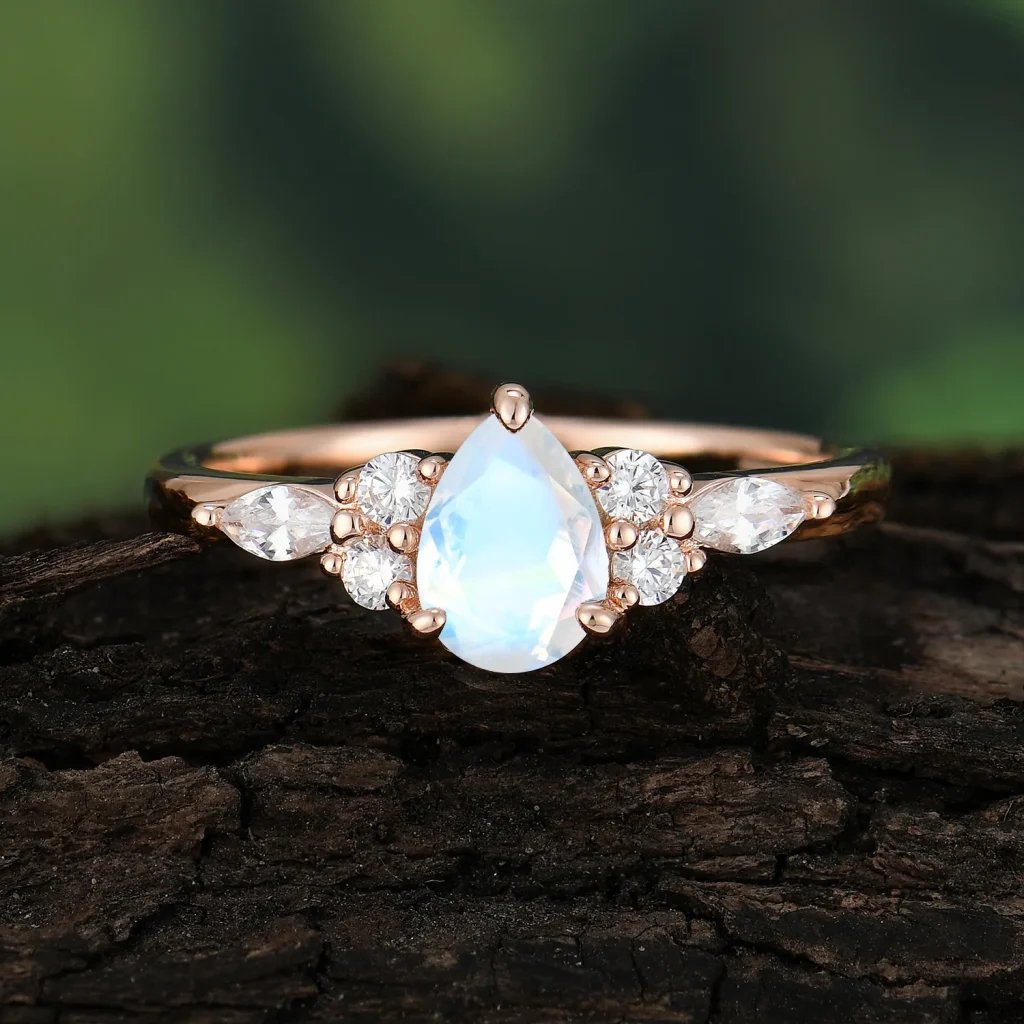
Moissanite vs. Cubic Zirconia: Stunning Diamond Alternatives You Should Know
Due to the high cost and rarity of natural diamonds, many people are turning to alternative gemstones that offer a similar sparkle and brilliance. Two of the most popular and affordable diamond substitutes are moissanite and cubic zirconia (CZ). These stones closely resemble the look of real diamonds, making them excellent choices for engagement rings and other fine jewelry pieces. Whether you’re looking for beauty on a budget or an ethical alternative, moissanite and CZ both provide eye-catching sparkle without the hefty price tag.
However, they differ significantly in various ways, such as durability, brilliance, color, and cost. This post delves into the moissanite vs cubic zirconia debate, examining their features to help you make an informed decision on your next jewelry purchase.
Moissanite is a crystalline substance that’s composed of “silicon carbide.” It’s a very rare stone that can’t be found in large quantities (in a place) enough to make up a proper gemstone. This stone boats of exceptional durability and brilliance, which is one the major highlights of the moissanite vs diamond comparison.
However, they differ significantly in various ways, such as durability, brilliance, color, and cost. This post delves into the moissanite vs cubic zirconia debate, examining their features to help you make an informed decision on your next jewelry purchase.
Durability and Hardness
Moissanite: Second only to diamonds on the Mohs scale, with a 9.25 rating. It’s highly scratch-resistant and maintains its clarity & polish over decades. Thus, best for everyday wear.
Cubic Zirconia: Has an 8-8.25 rating on the Mohs scale. It’s softer and prone to scratches, cloudiness, and wear over time. Thus, best for occasional use.
Moissanite: Has a higher refractive index (2.65-2.69), creating intense fire and rainbow-like sparkle. This results in a unique, lively brilliance under light.
Cubic Zirconia: Has a lower refractive index (2.15-2.18), creating a less fiery, softer, and more subdued sparkle that can appear slightly “glassy.”
Moissanite: Natural moissanite are colorless or near-colorless (graded D-K on the diamond color scale), but may show faint yellow or green tints in some lighting. But lab-grown moissanite has excellent clarity with little impurities.
Cubic Zirconia: CZ is often colorless (graded D), just like high-quality diamonds. But they develop cloudiness and scratches over time because of their softness.
Moissanite: How expensive is moissanite? This lab-grown gemstone is priced at $200- $600 per carat, which is around 20% of a diamond’s cost. Moissanite is more expensive than CZ, but more valuable.
Cubic Zirconia: Extremely affordable (usually below $50 per carat). While it does not hold much value as moissanite, its low cost makes it ideal for trendy or temporary jewelry.
Can you tell moissanite from cubic zirconia through naked eyes? It is possible to tell them apart for preliminary information. But for more accurate results, you need professional equipment.
Here are several ways to identify a moissanite from cubic zirconia:
1. Fire Dispersion Difference
A glaring indicator that will help you differentiate moissanite vs cubic zirconia is their fire dispersion. Moissanite has an extremely strong fire, displaying rainbow-colored flashes that are evenly distributed. This is especially noticeable under artificial light or sunlight. It even surpasses the brilliance of diamonds.
Cubic zirconia, on the other hand, has a weaker fire, with a color that tends to be more white and unnatural. It reflects light rather than refracts it, resulting in an overall less vivid sparkle.
2.Price
Moissanite vs cubic zirconia price can also be used as a difference indicator. Moissanite stones are more expensive ($200 – $600 per carat). However, they offer long-term value thanks to their hardness and durability.
Cubic zirconia stones are cheaper (below $50 per carat), but may require frequent replacement because they are softer.
3.Moissanite Tester
Finally, you can differentiate cubic zirconia vs moissanite by using some specialized devices that will examine their physical properties. Some of these devices are:
Things to Consider When Choosing between Moissanite and Cubic Zirconia
The best choice between moissanite and cubic zirconia varies amongst different individuals. While moissanite might be better for some people, cubic zirconia is the preferred option for others.
Generally, here are the things to consider when choosing:
If your brand is targeted at the high-end and luxury market, the better option is moissanite. But if your business is focused on fashion jewelry consumers and people who like to tap into trendy accessories, choose cubic zirconia.
Moissanite is the closest to diamonds, making it the most suitable for every purpose diamonds are used for. They can be used for engagement rings and integrated into fine jewelry collections. Cubic zirconia, on the other hand, are best utilized in fashion-forward designs and trend-based collections.
If you have a tight budget, cubic zirconia is the preferred option because it’s cheaper. But if you are not restricted by budget, you can venture into moissanite.
